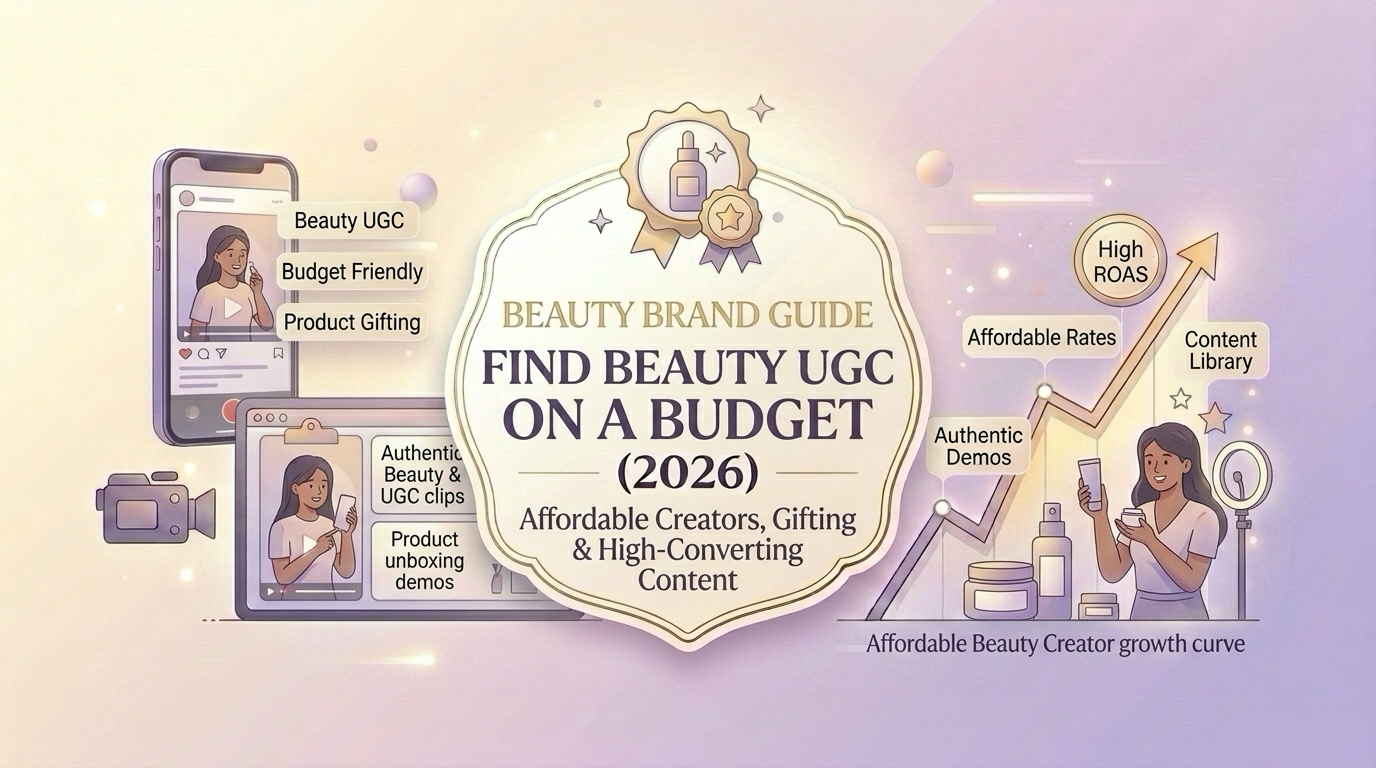
There are so many beauty creators on every platform. But finding the one that fits your brand like a glove is difficult. And contrary to the popular opinion, you don't need a huge budget or an agency to find good UGC creators for your beauty brand.
Here's how to do it.
1. Decide what you actually want from your UGC creators
Before you start searching, decide what you want the creators to make.
For a beauty brand, that could be:
- Product demonstrations
- Skincare routines
- GRWM videos
- Tutorials
- Unboxings
- Product reviews
- Testimonials
- Before-and-after content
- Voiceover videos
- Product photography
Also decide where you'll use the content.
A video for your Instagram page might be different from one you'll use in a paid ad. If you want to run the creator's content as an ad, make sure the usage rights are included in your agreement.
Having this figured out first makes creator sourcing much easier. You're no longer looking for "a beauty creator." You're looking for someone who can make three 30-second skincare videos for paid and organic social, for example.
2. Where to find beauty UGC creators
There are several places you can look, and you don't need to stick to just one.
UGC marketplaces
Dedicated UGC marketplaces are probably the easiest place to start if you don't already have a list of creators.
You can browse UGC creator portfolios and, depending on the platform, filter by things like niche, location, content style, demographics, and budget.
For a small beauty brand, this can be much faster than manually searching through social media.
Platforms such as AveoReach let brands search for creators and post campaigns, making it easier to find people who are already interested in creating UGC.
Fiverr
Fiverr can be useful when you're working with a very specific budget or deliverable.
Search for things like:
- Beauty UGC
- Skincare UGC
- Makeup UGC
- Product video
- Beauty product demo
You'll find creators at different price points, so compare their portfolios rather than simply choosing the cheapest option.
Pay attention to what the listed price actually includes. One creator's $50 package might include one short video, while others might include multiple hooks, revisions, or raw footage.
Upwork
Upwork is another option if you want to find freelancers and potentially build an ongoing relationship with one creator.
You can post a project describing exactly what you need, or search for freelancers who already specialise in UGC and beauty content.
It's particularly useful if you know you'll need content regularly and want to find a creator you can work with more than once.
Instagram is great for finding creators organically.
Search for things like:
- beauty UGC
- skincare UGC
- makeup creator
- skincare creator
- beauty content creator
You can also look at the creators already posting about products similar to yours.
That's often a better starting point than searching purely by follower count. If someone is already making the kind of videos you want, you can see exactly what their content looks like before reaching out.
TikTok
TikTok is another good source for beauty creators. Search your product category and see who's already making content around it.
For example, if you sell a lip product, look at creators making makeup tutorials, lip combos, product reviews, and GRWM content. You may find smaller creators whose content is exactly what you're looking for.
Your existing customers
Don't forget about the people who already use your product.
Check your:
- Instagram tags
- Product reviews
- DMs
- Customer posts
- Branded hashtags
You might already have customers creating content that you could turn into a paid collaboration. You can also ask your audience if anyone is interested in creating UGC for the brand. Someone who already knows and likes your product can be a very natural fit.
3. How to choose the right beauty UGC creator
Once you've found potential creators, don't just look at their follower count. You're hiring them to create content, so look at the content.
Look at their existing videos
Ask yourself:
- Does their content look natural?
- Are they comfortable on camera?
- Can they explain a product clearly?
- Is the lighting and audio good enough?
- Do they know how to demonstrate products?
- Does their editing style fit your brand?
You should be able to watch someone's portfolio and get a pretty good idea of what they'll deliver.
Look for product fit
A creator doesn't need to have created content for your exact product before. But there should be some connection.
If you're selling curly hair products, someone who regularly creates curly hair content is probably worth considering.
If you're selling acne skincare, look for creators whose existing content is relevant to skincare and your target audience.
The closer the fit, the more naturally they can talk about the product.
Don't automatically choose the cheapest creator
A cheap video that you can't actually use isn't a bargain.
Compare the creator's:
- Portfolio
- Deliverables
- Experience
- Revision policy
- Turnaround time
- Usage rights
You're trying to find the best combination of content quality and cost, not simply the lowest number.
4. How much should a small beauty brand budget for UGC?
UGC pricing varies a lot, so there isn't one rate that applies to every creator.
As a rough starting point for campaign planning:
| Budget | What you could test |
|---|---|
| $100–$300 | 1–2 creators or a few simple deliverables |
| $300–$600 | Several creators or multiple videos |
| $600–$1,000+ | More creators, more deliverables, or broader usage |
These aren't fixed industry rates. A creator's price can change depending on their experience, the number of videos, complexity, revisions, turnaround time, and how you'll use the content.
Remember to ask about usage rights
This is particularly important if you plan to use UGC in paid advertising.
Before agreeing to a price, find out:
- Can you use the video organically?
- Can you use it in paid ads?
- For how long?
- Can you edit it?
- Do you receive the raw footage?
- Can you use it on your website?
Don't assume that paying for a video automatically gives you unlimited rights to use it everywhere.
5. How to reach out to beauty UGC creators
Your first message doesn't need to be complicated.
Tell them:
- Who you are
- What your brand sells
- Why you're interested in working with them
- What you want them to create
- Whether it's paid or gifted
For example:
Hey [Name], we're a skincare brand and came across your content. We really like your style and think you'd be a good fit for our [product].
We're looking for [one 30-second product demo + one testimonial-style video] and wanted to see if you'd be interested in a paid collaboration.
If you're interested, I can send you the full brief and details.
Keep it short. If they're interested, you can get into the details afterward.
And if it's a gifted collaboration rather than paid, say so upfront.
6. How to build a UGC campaign on a small budget
You don't need to hire ten creators for your first campaign.
Let's say you have $500 to spend.
Instead of spending the whole amount on one creator, you could test:
3 creators × 1 video each
Give them the same basic product information but let each creator approach the video differently.
For example:
- Creator 1: Product demonstration
- Creator 2: Problem/solution
- Creator 3: Testimonial
Now you have three different creative directions to work with. If one style clearly performs better, you can put more of your next budget behind that type of content.
The goal of the first campaign isn't necessarily to create the perfect video. It's to figure out which creators and creative styles work for your brand.
7. What should you include in your UGC brief?
A good brief should give creators enough information to understand the product without telling them exactly what to say.
Include:
Product: What they're creating content for.
Target audience: Who you're trying to reach.
Key message: The main thing you want viewers to take away.
Deliverables: Number of videos, length, format, etc.
Must-mention points: Product benefits or features that need to be included.
Things to avoid: Claims or statements the creator shouldn't make.
Visual requirements: Any shots or demonstrations you need.
Deadline: When you need the content.
Revisions: How many are included.
Usage rights: Where and how you'll use the content.
For beauty products in particular, be careful about giving creators claims they shouldn't make. If you're selling skincare, for example, don't encourage creators to make medical or guaranteed-result claims that you can't substantiate.
8. Common mistakes when sourcing beauty UGC creators
Choosing based on follower count
You're hiring someone to create content. Their follower count may not matter at all.
Hiring one creator without testing others
You won't know what works until you try different people and formats.
Being too vague about the deliverables
"Make us a skincare video" isn't much of a brief. Be specific about what you're paying for.
Trying to control every word
Give creators the key points and boundaries, then let them create in their own style. That's part of what makes UGC useful in the first place.
Forgetting usage rights
Always agree on how the content can be used before the creator starts working.
Assuming gifted products guarantee content
They don't. If you need specific content by a specific deadline, agree on the deliverables upfront.
A simple way to start
If you've never worked with UGC creators before, keep your first campaign small.
- Choose the product you most want to promote.
- Product demos? Testimonials? GRWMs? Tutorials?
- Search UGC marketplaces, Fiverr, Upwork, Instagram, TikTok, and your existing customers.
- Look at their content quality, product fit, and what their pricing actually includes.
- Don't spend the entire budget before you know what works.
- Once you find creators and content styles that work for your brand, you can start building longer-term relationships with those creators instead of starting from scratch every campaign.